Dog News

Latest updates on everything dogs: news, health tips, breed info, and heartwarming stories for every dog lover.

Internet Heartbroken After Best Friend Dogsitting Ends in Tragedy

Internet Heartbroken After Best Friend Dogsitting Ends in Tragedy

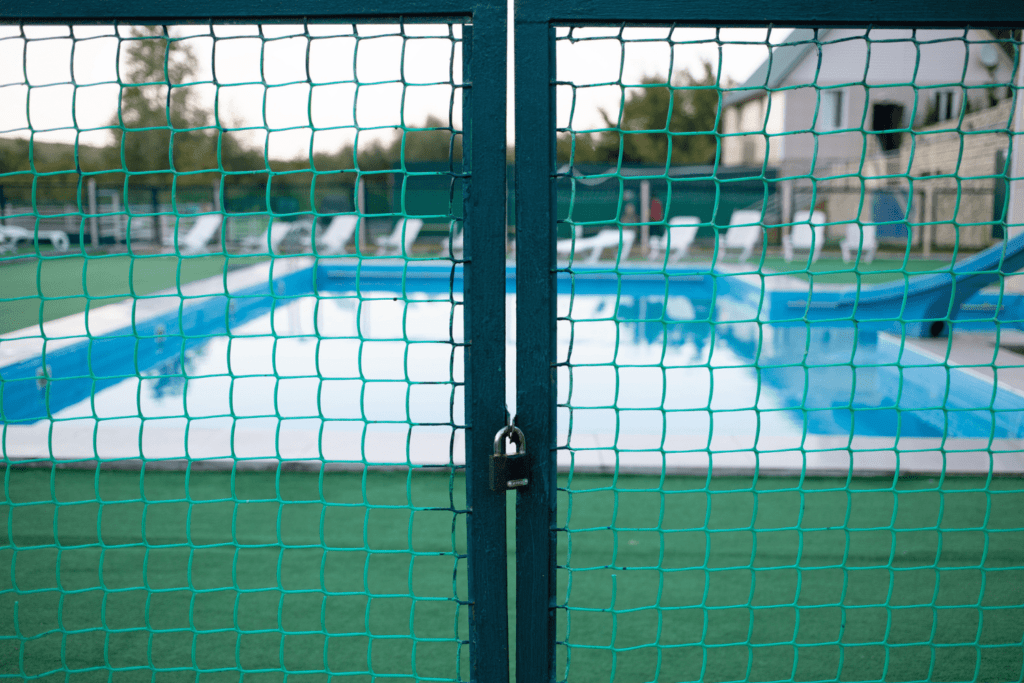
In a heart-wrenching post on Reddit‘s r/NoStupidQuestions, a user has shared how a tragic accident has left them struggling to move forward. While trying to help a friend who had just had a newborn, the Redditor took in the friend’s dog so it could enjoy a spacious garden. However, despite their vigilance, the French bulldog named Archie slipped into the user’s swimming pool and drowned. “So long story short, my best friend just had her second baby… I offered to help watch their dog because they live in an apartment and I have a big garden,” the user wrote in the post. While preparing to go out, they momentarily lost sight of the dog and discovered too late that Archie had fallen into the pool. “He was still warm and soft. I tried to do CPR for over 20 minutes… I was hysterical,” the Redditor said. “They don’t blame me, but obviously I should have been more careful and it was my responsibility.” As well as damage to the friends’ relationship, the poster said they were also worried about their seven-year-old son who witness the incident. “How can we get over this?” they asked, searching for guidance on managing the trauma, restoring the friendship, and forgiving themselves. A file photo of a pool behind a locked gate. After a dog’s tragic death on her watch, a woman asked the internet how she will forgive herself. avtk/Getty Images The post has thousands of upvotes and hundreds of responses on Reddit where people were quick to share their reactions. “Apologize as much as you can. Invest in a pool fence…this will show your friends you’ve taken this seriously,” suggested user MarzyMalyss. While Redditor Ninj-nerd1998 echoed the idea and said: “One thing you should definitely do is install a fence around your pool if you haven’t got one already. They exist to prevent things like that.” Psychologist and relationship expert Veronica West shared her thoughts on the tragic scenario. “This is one of those unexpected pop quiz scenarios that life throws at you when the questions are in a foreign language,” she told Newsweek. “You intervened out of love and good intentions, but destiny turned your life upside down.” West noted that feelings of guilt are a common response to accidental loss, emphasizing that guilt often serves as “your brain’s way of ensuring you care.” She suggested that the Redditor write down positive memories they shared with Archie as a way to counterbalance self-blame and, if the guilt remains overwhelming, to consider speaking with a therapist who can help “evict that pesky voice in your head that says, ‘This is all on me.’” When it comes to helping the child who witnessed the tragic incident, West said that communication is key. She recommended creating a small memorial activity, such as planting flowers or sharing favorite memories of Archie. “Kids can be surprisingly wise when given the chance,” she said. “Acknowledge their feelings, and maybe even share that it’s okay to be sad and a little confused—grown-ups feel that way, too.” The heartbreaking story struck a chord with people on Reddit, but West advised the Reddit user ensured they cut themselves some slack. “Give yourself the same compassion you’d give anyone else—and remember, chocolate helps,” she said. Newsweek could not verify the details of this case. Read More

Internet Heartbroken After Best Friend Dogsitting Ends in Tragedy Read More »
Dog Bitten Twice by Snake While Protecting Siblings and Owner

Dog Bitten Twice by Snake While Protecting Siblings and Owner

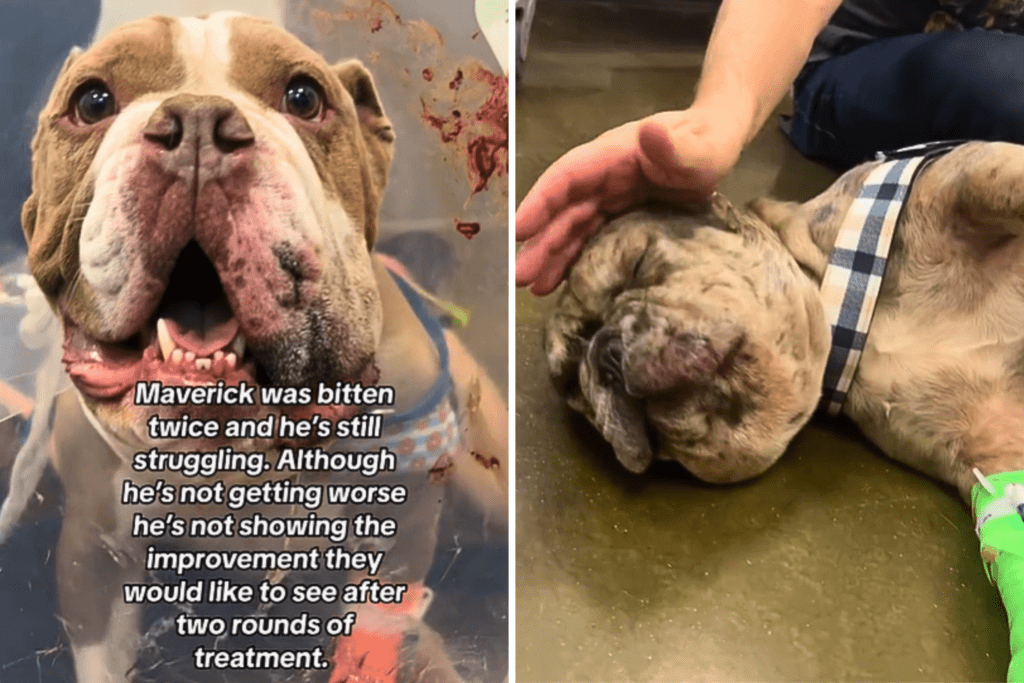
A dog has been left fighting for his life after suffering two bites while protecting his owner and canine siblings from a rattlesnake. Maverick, an English bulldog, was attacked on two occasions by the western diamondback rattlesnake while playing in his garden in southern Arizona. His sibling, Finley, was bitten once on the cheek by the reptile, but has since been recovering well despite the fatal risk of such an encounter. Maverick is showing slower signs of improvement, and the shocking ordeal has left his owner feeling “heartbroken.” “They were bitten and we were able to get them to put emergency vet within 30 minutes,” their owner, who asked to keep their identity private, told Newsweek. “The snake had come through our fence opening and our dogs did not really freak out until I freaked out.” Finley, a grey-shaded Merle Frenchie, was hit once and responded to treatment quickly, with his owner saying that he showed significant improvement by the end of day one. Maverick, who sustained two bites to his face, has had a more challenging recovery and did not respond as quickly to the treatment provided. “They spent one and a half days in the hospital and then were able to come home to continue to get well,” their owner said. “They are on the mend, and now we are just working on keeping the bite sites from getting infected as the venom left funnel-shaped holes in their faces.” The incident, which has since gone viral on TikTok, showcases the aftermath of the ordeal and the dogs’ ongoing recovery. The video, which was shared to the platform under the username @maverick_peach_finley, captures Maverick and Finley wearing plastic braces around their necks and bandages over their bites. These braces are attributed to their recovery process, administered by the veterinary team. The overlaid text on the video provides a chilling account of the early morning incident. “Both Maverick and Finley were bitten by a rattlesnake that made it onto our backyard. We rushed them to the emergency vet and immediately started them on antivenom and blood transfusions,” their owner wrote. Maverick and Finley receive antivenom treatment at a veterinary center in Arizona after being bitten by a rattlesnake. Their owner says that they are “on the mend,” but that one canine is healing faster than… @maverick_peach_finley The dogs were quick to respond to the threat, despite having received rattlesnake avoidance training, a product of living in a state that is home to a variety of venomous snakes. Their owner said that Maverick was acting in defense of his owner and dog siblings, Finley and Peach, with the latter escaping the situation unscathed. “Maverick has rattlesnake avoidance training and will always stay away from them, but was in this case acting in protection and trying to keep us safe,” the owner said. Dr. Terry Fossum, a board-certified veterinary surgeon, spoke with Newsweek about the dangers of rattlesnake bites in dogs. “These bites can be fatal,” she said. “Time is crucial and it is important to get your dog to a veterinarian for antivenom treatment as quickly as possible. “Your dog has a high survival rate if the antivenom is administered in a timely manner. Don’t attempt at-home care. If your dog has been bitten or you suspect a rattlesnake bite, go to the closest veterinary clinic.” Several factors can influence the survival rate of a dog bitten by a rattlesnake, as Fossum explained. These include the time to treatment, size of the dog, location of the bite, and the amount of venom injected. With prompt treatment, survival rates are generally high, ranging between 80 to 90 percent. The rapid response of the owner, who managed to get Maverick and Finley to the emergency vet within 30 minutes, played a crucial role in their ongoing recovery. “We’re heartbroken and hope tomorrow will bring us some better news,” their owner told viewers online. “We love [Maverick] for his loyalty and protectiveness.” Do you have funny and adorable videos or pictures of your pet you want to share? Send them to life@newsweek.com with some details about your best friend and they could appear in our Pet of the Week lineup. Read More

Dog Bitten Twice by Snake While Protecting Siblings and Owner Read More »

How to raise a great dog, according to science

How to raise a great dog, according to science

At a special kindergarten in North Carolina, youngsters play, socialize, snooze, and learn how to sit, stay, and avoid pooping in the classroom. These kindergarteners are dogs, not humans, enrolled in Duke University’s Puppy Kindergarten, but the specialized games and tasks these pups tackle in the classroom aren’t so different to those used to study the development of human children. For both dogs and their human companions, learning new skills are key steps in their journey to adulthood. Duke researchers Brian Hare and Vanessa Woods modeled their curriculum on techniques that psychologists use to test children’s minds. Countless hours spent with the adorable but exhausting pups enabled them to pinpoint when key cognitive skills emerge at different times during canine development. These skills, like being able to retain memories and exhibit self-control, enable dogs’ amazing abilities to connect and cooperate with humans.  As dog lovers know, each pup is an individual. “Dogs have different types of intelligence, different cognitive profiles, and they are going to develop at different paces,” says Hare, an evolutionary anthropologist.   The research described in the engaging new book Puppy Kindergarten: The New Science Of Raising a Great Dog, grew out of Hare and Woods’s decade-long partnership with Canine Companions, the largest service dog provider in the United States. Nowadays, the dogs most people want as pets also look a lot like service dogs. “For 100 years, these service dogs have always had to fit into our families, be polite to people, sit in a cafe, walk nicely on a leash,” says Woods, director of the Duke Puppy Kindergarten. Drawing a road map of typical cognitive development in puppies can help predict which ones could excel as service animals and also help new dog parents raise great dogs. When can puppies learn key skills? In puppy kindergarten, the Duke team followed the development of 101 puppies, tested every two weeks between eight and 20 weeks old. All were Labrador retrievers or Labrador-Golden retriever mixes. Half lived at Duke, while the other half were raised in volunteer family homes. They supplemented that with studies of 221 puppies tested a single time, and 37 wolf puppies for comparison. (Research continues with a new class of pups currently enrolled at Duke.) LIMITED TIME OFFER The perfect gift for the history buff in your life. Give now and get a FREE TOTE BAG. Data also poured in from almost 50,000 pet dogs of varied breeds who were tested at home by their owners through the Dognition project. Though big and small dogs do tend to develop a bit differently, breeds didn’t appear to matter for the cognitive abilities the group measured. Puppy cognitive skills, it turns out, emerge and develop on this general timeline:  Good dogs must remember skills, past situations, and different people and places. Around eight weeks, puppies remembered where a treat was hidden, even after time passed or when they had been distracted during the hiding by a squeaky toy. Owners should take note; before memory develops, young dogs aren’t being bad or disobedient—they literally can’t remember what you want them to do. Dogs need self-control to keep them on track when they want to play or chase squirrels instead of listening to humans. Puppies were first acclimated to getting a treat by going around to the open end of a cylinder. Researchers then swapped in a transparent cylinder. With a treat immediately in view but inaccessible, puppies had to remember the detour to the open end of the cylinder.  Understanding this timing could help owners face training dilemmas, like whether to respond to overnight barking. “We have data now that explains there is probably a transition,” Hare says. “Before 13 weeks, if they are barking, go get your dog. They aren’t trying to manipulate you, they aren’t going to learn a bad habit, they probably just need to go to the bathroom.” Once the pups have developed more self-control, by 13 or 14 weeks, owners can start to think about handling those midnight interruptions differently. Around eight weeks puppies begin to read the way we communicate through hand gestures, facial expressions, and vocal signals and our cooperative intentions better than our great ape cousins. “And this at an age where they can barely walk across the room without falling asleep,” Woods adds. When humans pointed to a hidden treat, the puppies usually found it. The same was true when they used gestures the dog had never seen, like putting a marker near the hiding place. By 10 weeks, they’ve mastered the understanding of basic human gestures, their first cognitive skill. Good dogs may be primed to learn these social, cooperative communication skills by their evolutionary history rather than life experiences. “When puppies are so young, having these abilities, it’s suggesting that this may be something that’s been built in by domestication,” says Angie Johnston director of Canine Cognition Center and Social Learning Laboratory at Boston College. While puppies aren’t on the same cognitive level as human babies, the two species begin to develop some of the same skills at a very young age. Human cognitive development features a revolutionary period between nine and 12 months, when babies do things like follow gazes or gestures, and develop a window into the minds of others outside of themselves. “What makes dogs so humanlike is not just that they read gestures, it’s that is very early emerging in dogs the way that it’s early emerging in kids,” Hare explains. (How did “puppy dog eyes” evolve?) When faced with unsolvable problems, dogs use social problem solving—looking at people for help. Eye contact between dogs and humans is an extremely important part of our relationship; gazing even hijacks the human oxytocin loop that promotes bonding with our own infants. Puppy kindergarteners given an unattainable treat in a snapback container, even for just five minutes every two weeks, doubled the amount of overall eye contact they made with humans. (Don’t worry: After 90 seconds, dogs get the treat no matter what.)

How to raise a great dog, according to science Read More »

Shelter Dog Returned for Biting Transformed by Volunteer’s Love: ‘Crying’

Shelter Dog Returned for Biting Transformed by Volunteer’s Love: ‘Crying’

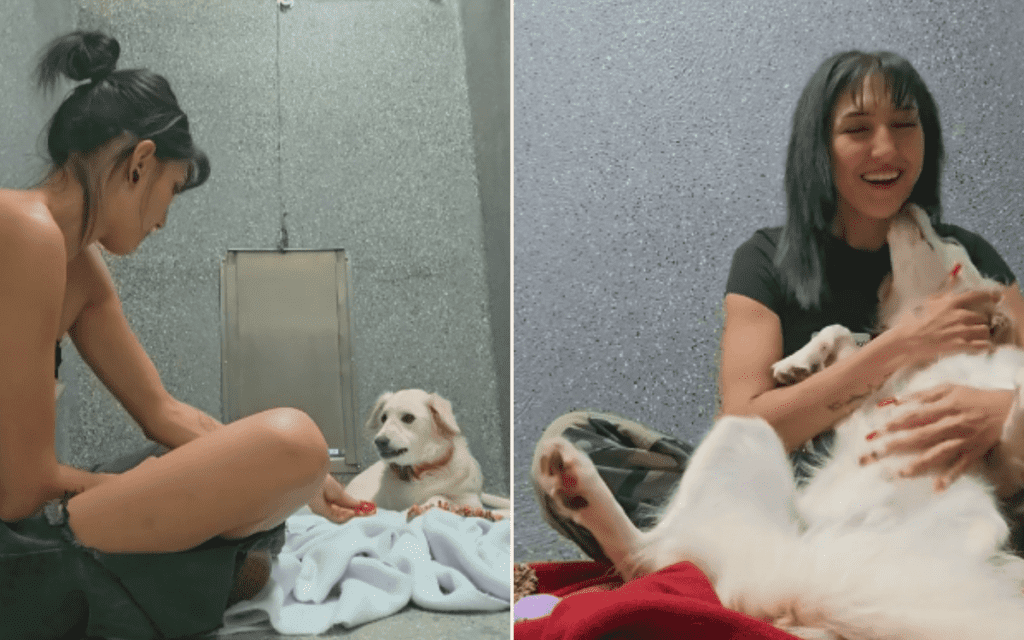
A shelter dog who was returned for biting underwent a remarkable transformation, thanks to the care and attention of a volunteer. Amie Addington shared footage to TikTok under the handle @themagic.dragon, showcasing the difference she has seen in the way a dog by the name of Emmanuel has behaved since she started visiting him. Emmanuel resides at the Valley Animal Center in Fresno, California. “He was adopted from the shelter as a puppy and then returned for biting,” Addington told Newsweek. “I’m not sure exactly about his life before but the staff has said that it doesn’t seem like he was socialized at all which is why he was terrified of everyone.” More From Newsweek Vault: The 10 Cheapest Pet Insurance Plans Dog bites are a serious matter, with the Centers for Disease Control and Prevention estimating that close to one in five people bitten by a dog proceed to require medical attention. It’s important to stress that the majority of dog bites occur when the canine involved is scared, nervous, eating or playing with either toys or puppies. Emmanuel certainly fell into this category. Addington said that Emmanuel really struggled with people when he first arrived at the shelter. “He would show teeth and growl because he was scared of anyone coming near him,” she said. It took time and patience for the shelter pup to get used to having Addington in his personal space inside the kennel. In the video she posted to social media, Emmanuel can be seen bearing his teeth at Addington. That eventually changes though. More From Newsweek Vault: Compare Top Pet Insurance Plans For Dogs “The first four days I sat with him for about four hours each day and since the third day he hasn’t growled or anything,” she said. By the end of the video, Emmanuel can be seen cuddled up to Addington. It’s clear she has won his trust. Commenting on the video, one dog lover commented, “he feels safe with you,” while another was “crying” at witnessing the change. More From Newsweek Vault: The Top Rewards Credit Cards for Pet Owners Addington is keen to stress that she doesn’t have a set blueprint to success when it comes to helping dogs of this kind. “I really just had to be patient with him and read his body language when he needed space. I’m not an expert and he’s the first dog I’ve done this with so I was learning too,” she said. “I did research and read about reactive and anxious dog behaviors so that I could help him and other dogs better.” A lot of it came down to simply sitting with him and keeping him company. “I gave treats when he’d come to me and tried not to make too much eye contact,” Addington said. “Showing him I wasn’t going to hurt him.” Amie’s first meeting with Emmanuel, pictured on the left. Things have since changed for the better, shown on the right. themagic.dragon Those efforts have made a world of difference, with Addington overjoyed at the way Emmanuel has “come out of his shell.” “He plays with toys now and he loves the floppy ones that he can throw around,” she said. “Emmanuel is very vocal and sounds like a flute when he does his happy cries.” Addington feels that Emmanuel living in a shelter has hindered his progress on some level, simply because of his aversion to being there. “He still struggles with the shelter and when I take him outside on a leash he will pace back and forth trying to find his way out of the gate,” she said. “It’s really heartbreaking. I feel like so many of them would be completely changed animals if they were just able to get out of there and get some peace and quiet.” Research supports her assertion. A 2006 study published in the journal Physiology and Behavior found dogs entering a shelter on average had around three times the level of the stress hormone cortisol in their system over their first three days there than normally domesticated canines. Emmanuel is still nervous around dogs and probably isn’t the kind of dog that would be good with a family that has kids, but Addington’s video shows he’s capable of living a happy life with the right special someone. He just needs to find them now. Read More

Shelter Dog Returned for Biting Transformed by Volunteer’s Love: ‘Crying’ Read More »

Campaign to Save Team USA Gymnastics Therapy Dog Launched: ‘Goodest Boy’

Campaign to Save Team USA Gymnastics Therapy Dog Launched: ‘Goodest Boy’

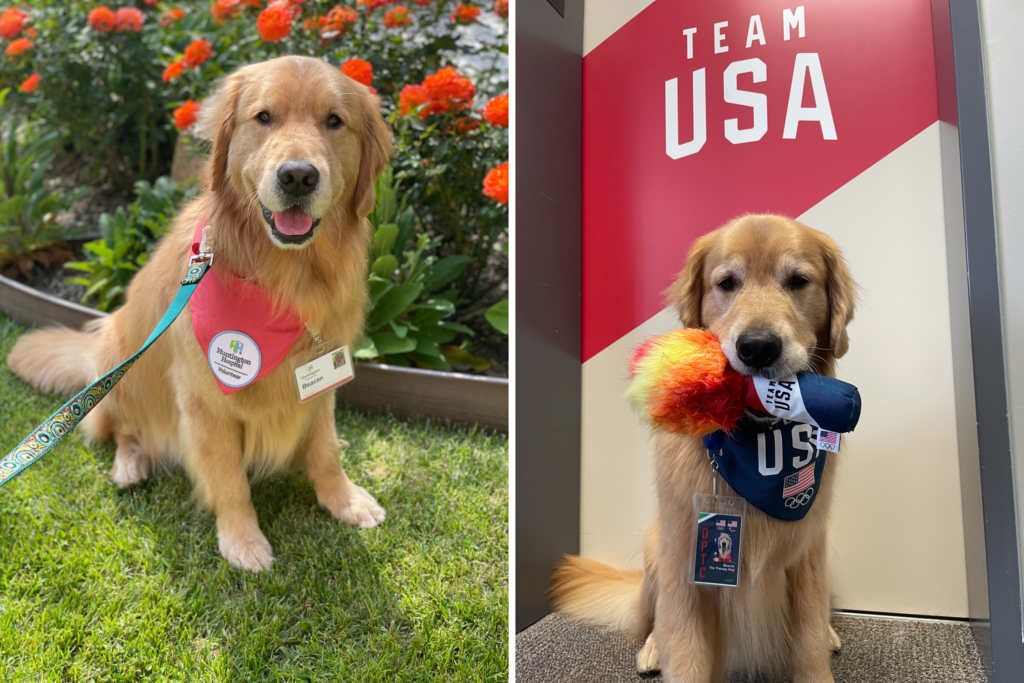
USA Gymnastics’ beloved therapy dog has fallen ill with a mystery condition. Now, he needs help to cover his extortionate veterinary bills so he can attend the 2028 Olympics. Beacon, a golden retriever (@goldendogbeacon) known as “the goodest boy,” is not just any dog; he’s an indispensable member of the national gymnastics squad, providing emotional support and helping athletes manage their nerves and anxieties during high-stress competitions. Three weeks ago, Beacon’s owner, 65-year-old Tracey Callahan Molnar, noticed something alarming upon returning from a hiking trip in California’s Angeles National Forest. “He was moving stiffly,” she told Newsweek. She immediately took him to the vet, where he received an anti-inflammatory injection. His blood work came back normal, and for a short time, Beacon seemed to improve. However, during a rhythmic gymnastics camp in New York, his condition plateaued. Worried, Molnar took him back to the vet. “They did some X-rays, which showed fluid in his chest cavity—he was also running a fever. Things escalated from there,” she said. Beacon was rushed to an emergency veterinary hospital, where he was placed in a room with an oxygen chamber. USA Gymnastics’ “goodest boy.” Beacon works hard as a therapy dog for the USA Gymnastics squad, in a hospital and California Institute of Technology. @goldendogbeacon/@goldendogbeacon On September 3, Beacon was diagnosed with pleural effusion, a condition where fluid builds up in the chest cavity, making it difficult to breathe. Vets drained 700ml of liquid from his chest. “I felt upside down. Beacon is 4 years old. While we were camping and hiking, it was business as usual; nothing seemed out of the ordinary. Even now, it’s just so baffling,” she said. Jacqueline Fealy, a family friend who set up the fundraiser, reported that Beacon’s surgery on September 5 went well. “They were able to biopsy tissue from his chest cavity and installed two drainage ports, one on each side. The doctors have been monitoring the drainage, and with the help of steroids, the fluid accumulation has reduced slightly. Beacon had a peaceful night,” she said on the fundraising page. Beacon was discharged from True Care For Pets, Studio City, on September 7, and Molnar was trained to empty his chest drainage ports. Though he was briefly readmitted a few days later due to elevated breathing rates, doctors attributed the spike to medication, and he returned home in better spirits. Despite extensive testing, Beacon’s condition remains a mystery. They have ruled out cancer from the biopsy results after fears his deterioration could have been linked to mesothelioma, a rare kind of cancer triggered by asbestos. “Needless to say, finding out it’s not only NOT mesothelioma, but NOT cancer of any kind is reassuring on one hand but still scary because they still don’t have a definitive diagnosis,” Molnar shared on Beacon’s Instagram page in a video update that garnered 42,600 views. While hospitalized, his exhausted yet determined spirit shone through. “They had little stuffed animals in the room—Beacon is obsessed with stuffed animals—and even though he was weak, he lifted his nose to try and reach one,” Molnar told Newsweek. Although Beacon’s organs appear healthy based on ultrasounds, and he has undergone a CT scan and tissue biopsy of his lungs, there is still no definitive answer for his condition. Doctors have already ruled out common fungi and bacteria and are now investigating his travel history over the past year to conduct more thorough tests. “I felt like I saw, for the first time in three weeks, a little bit of our Beacon again—he had a bit more energy, there was a bit more tail wagging,” Molnar said. USA Gymnastics shared their support for their much-loved therapy dog. “We’re wishing Good Boy Beacon a speedy recovery!” they wrote on Facebook. Beacon’s Gymnastics Career Beacon officially became a therapy dog in May 2022. He quickly made a name for himself by helping U.S. gymnasts stay calm and focused in the lead-up to major competitions. He also provides animal-assisted therapy in hospitals in Pasadena and at Cal Tech University. Molnar, who has been involved in the sport as a gymnast and later as a rhythmic gymnastics coach, was recruited alongside her canine companion to offer animal therapy to USA Gymnastics. He skyrocketed in popularity during the USA Olympic Trials in Minneapolis in June 2024. “It’s been an overwhelming success from the very first endeavor. His popularity went through the roof,” Molnar said. Beacon the golden retriever as a puppy and outdoors. The 4-year-old loves hiking, camping, walking and swimming. @goldendogbeacon/@goldendogbeacon According to Molnar, science has shown that interacting with animals—whether through petting, talking, or simply observing—can lower blood pressure, reduce cortisol levels, and increase feel-good hormones like serotonin and dopamine. Beacon has worked his magic by simply being present with the gymnasts, offering quiet comfort and affection. “The best visits are when I’m not talking at all,” Molnar told Newsweek. “I see myself as the conduit, letting that interaction happen naturally. People spending time with Beacon are talking and asking questions, Beacon will lay still, show his belly for rubs or will sit next to them. If they stop petting, he will scoot a little closer just to remind them he’s there.” USA Gymnastics has even created a wellness room where Beacon and other therapy dogs spend time with gymnasts before and after training and competitions. “It’s something beautiful to witness—a front-row seat to watching the stress melt away from their bodies. Their shoulders drop, their tense faces relax, and smiles appear. It’s such a gift,” Molnar said. Fealy owed USA Gymnastics’ meteoric success at the 2024 Olympics to Beacon’s support. “I may be biased, however, I believe Beacon was a positive factor that helped the gymnasts win so many medals at the 2024 Summer Olympics,” she wrote on the fundraiser page. Run-ins with Gymnastics Stars During his career, Beacon has met some of gymnastics’ biggest stars, including Suni Lee, Simone Biles, Jordan Chiles, Joscelyn Roberson and Evita Griskenas. Molnar fondly recalls Beacon’s interactions with Biles

Campaign to Save Team USA Gymnastics Therapy Dog Launched: ‘Goodest Boy’ Read More »

Boston Dynamics’ robot dog Spot can now ‘play fetch’ — thanks to MIT breakthrough

Boston Dynamics’ robot dog Spot can now ‘play fetch’ — thanks to MIT breakthrough

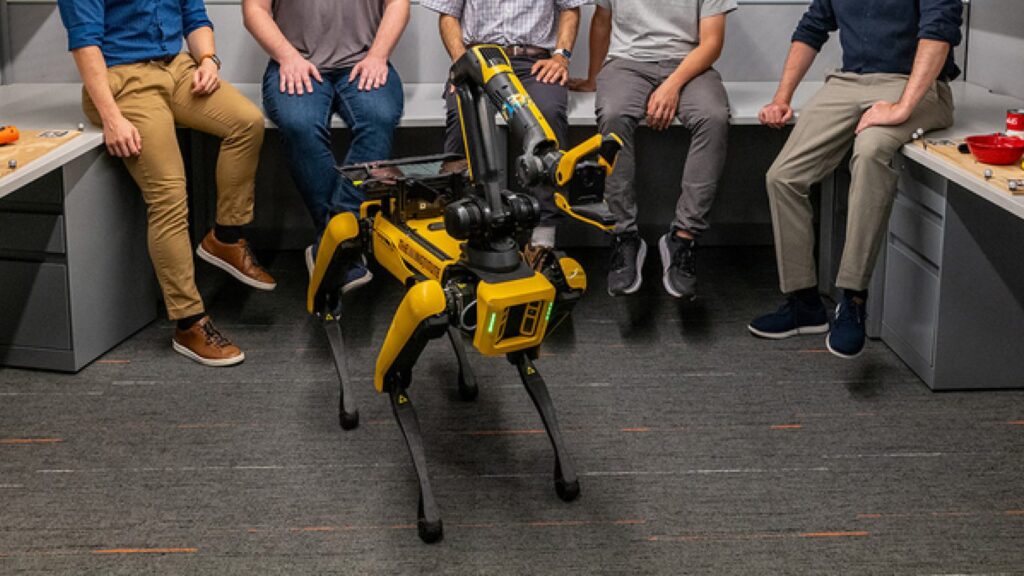
(Image credit: Andy Ryan) Dog-like robots could one day learn to play fetch, thanks to a blend of artificial intelligence (AI) and computer vision helping them zero in on objects. In a new study published Oct.10 in the journal IEEE Robotics and Automation Letters, researchers developed a method called “Clio” that lets robots rapidly map a scene using on-body cameras and identify the parts that are most relevant to the task they’ve been assigned via voice instructions.. Clio harnesses the theory of “information bottleneck,” whereby information is compressed in a way so that a neural network — a collection of machine learning algorithms layered to mimic the way the human brain processes information — only picks out and stores relevant segments. Any robot equipped with the system will process instructions such as “get first aid kit” and then only interpret the parts of its immediate environment that are relevant to its tasks — ignoring everything else. “For example, say there is a pile of books in the scene and my task is just to get the green book. In that case we push all this information about the scene through this bottleneck and end up with a cluster of segments that represent the green book,” study co-author Dominic Maggio, a graduate student at MIT, said in a statement. “All the other segments that are not relevant just get grouped in a cluster which we can simply remove. And we’re left with an object at the right granularity that is needed to support my task.” Related: ‘Put glue on your pizza’ embodies everything wrong with AI search — is SearchGPT ready to change that? To demonstrate Clio in action, the researchers used a Boston Dynamics Spot quadruped robot running Clio to explore an office building and carry out a set of tasks. Working in real time, Clio generated a virtual map showing only objects relevant to its tasks, which then enabled the Spot robot to complete its objectives. Seeing, understanding, doing The researchers achieved this level of granularity with Clio by combining large language models (LLMs) — multiple virtual neural networks that underpin artificial intelligence tools, systems and services — that have been trained to identify all manner of objects, with computer vision. Get the world’s most fascinating discoveries delivered straight to your inbox. Neural networks have made significant advances in accurately identifying objects within local or virtual environments, but these are often carefully curated scenarios with a limited number of objects that a robot or AI system has been pre-trained to recognize. The breakthrough Clio offers is the ability to be granular with what it sees in real time, relevant to the specific tasks it’s been assigned. A core part of this was to incorporate a mapping tool into Clio that enables it to split a scene into many small segments. A neural network then picks out segments that are semantically similar — meaning they serve the same intent or form similar objects. Effectively, the idea is to have AI-powered robots that can make intuitive and discriminative task-centric decisions in real time, rather than try to process an entire scene or environment first. In the future, the researchers plan to adapt Clio to handle higher-level tasks. “We’re still giving Clio tasks that are somewhat specific, like ‘find deck of cards,’” Maggio said. “For search and rescue, you need to give it more high-level tasks, like ‘find survivors,’ or ‘get power back on.’” So, we want to get to a more human-level understanding of how to accomplish more complex tasks.” If nothing else, Clio could be the key to having robot dogs that can actually play fetch — regardless of which park they are running around in. Roland Moore-Colyer is a freelance writer for Live Science and managing editor at consumer tech publication TechRadar, running the Mobile Computing vertical. At TechRadar, one of the U.K. and U.S.’ largest consumer technology websites, he focuses on smartphones and tablets. But beyond that, he taps into more than a decade of writing experience to bring people stories that cover electric vehicles (EVs), the evolution and practical use of artificial intelligence (AI), mixed reality products and use cases, and the evolution of computing both on a macro level and from a consumer angle. Most Popular Read More

Boston Dynamics’ robot dog Spot can now ‘play fetch’ — thanks to MIT breakthrough Read More »

Dozing Dog Realizes Owner Is Trying to Send Him to Bed, Won’t Let It Happen

Dozing Dog Realizes Owner Is Trying to Send Him to Bed, Won’t Let It Happen

Millions of social media viewers have fallen head over heels for a tiny dog refusing to go to sleep after a long day of playing. Clarke, a long-haired miniature dachshund, lives in Washington state with his owners, Chloe Pietropaolo and Cletus LoRusso, and like most dogs he is the boss of the house. “Clarke is such a character,” Pietropaolo, 30, told Newsweek. “Of course, we think everything he does is adorable and funny.” More From Newsweek Vault: The 10 Cheapest Pet Insurance Plans And viewers agreed, as a video of Clarke shared to Pietropaolo’s TikTok account, @clarketheween, on August 25 has exploded in popularity, with over 1.6 million likes and 9 million views. It shows Pietropaolo, 30, tugging a dog toy with Clarke while also stroking his head between his eyes. As Clarke begins dropping off, he starts letting go of the toy and becomes extremely relaxed, growling in a way that sounds like a cat’s purr. But all of a sudden, he wakes up and seems furious that Pietropaolo was trying to send him to sleep. His growls become louder, and he jumps up at her. Clarke the dachshund was drifting off to sleep as his owner stroked between his eyes. But he then realized what was happening and made his feelings clear. TikTok @clarketheween She wrote in a caption: “POV you realize Mom is trying to put you to sleep after playing for the last hour.” More From Newsweek Vault: The Top Rewards Credit Cards for Pet Owners Pietropaolo told Newsweek: “Clarke and I were playing for a long time, and I had to start calming him down to get ready for work. “I always run my finger up his nose and head before bed or to calm him down, and he loves it. I had my husband stand behind me to take a cute video for our family. It just so happened that this time Clarke was not having it and wanted to keep playing.” More From Newsweek Vault: Compare Top Pet Insurance Plans For Dogs She and her husband, game developer LoRusso, 32, “thought his reaction was hilarious and decided to post it on our TikTok page.” And TikTok users loved it, with hundreds commenting on the sweet clip, including one who joked: “I will not succumb to your witchcraft!” Another wrote: “He was drifting, then like wait no!” “The way he revved up after realizing,” another said, and as one user put it: “That baby was purring for a second.” Pietropaolo, who works as a paralegal, “still can’t believe he went viral.” “He is our whole world, so the fact that over 9 million people—and counting—have gotten to see him and laugh with us is amazing. In our eyes, he will live on forever now, and that’s incredible.” Clarke, now a year and a half old, has plenty of quirks, including stealing socks. TikTok @clarketheween Dachshunds are a popular choice for a family pet, and Pietropaolo and LoRusso did a lot of research before deciding the breed was perfect for them. When they met Clarke, it was “love at first sight.” Known for their affection toward their family, dachshunds are described as having a big, endearing personality. But as shown in the video, they can be very stubborn. In 2023, dachshunds like Clarke made No. 6 on the list of the American Kennel Club’s most popular dog breeds. The pup is now a year old and has plenty of “quirks,” Pietropaolo said, including being “obsessed with laundry,” specifically socks. “He will steal them any chance he gets. Packing is very difficult…your socks will always end up missing [or] stolen by Clarke.” Do you have funny and adorable videos or pictures of your pet you want to share? Send them to life@newsweek.com with some details about your best friend and they could appear in our Pet of the Week lineup. Read More

Dozing Dog Realizes Owner Is Trying to Send Him to Bed, Won’t Let It Happen Read More »

Why do dogs lick you? Expert explains

Why do dogs lick you? Expert explains

Understanding a dog’s behavior Expert breaks down what to know about dog’s behaviors When a dog showers you with kisses, it’s often to show you affection — but there’s also a reason that’s rooted in their evolutionary history. To better understand the reasoning behind a dog’s licks, Dr. Alexandra Horowitz, a dog cognition researcher and bestselling author of “The Year of the Puppy: How Dogs Become Themselves,” told “CBS Mornings Plus” on Thursday that we should look at their ancestors. Dogs are descended from wolves and when wolves hunt and return to their pack, then all of the other wolves swarm them and lick around their face. “The reason they do that is they’re asking the wolf to regurgitate a little bit of what they just hunted,” Horowitz explained. “So, your dog’s lick of you when you come home is absolutely a greeting — you know, they’re happy to see you. But also, it’s a little bit of a request for whatever you just ate.” They’re also using a lick to get information about the world. “They’re smelling you by licking you,” Horowitz added. Deciphering your dog’s behavior Dog owners often believe they can understand their pets, identifying whether their dog is barking to go on a walk, begging for food or trying to find their trapped tennis ball. “On some level, they are communicating with us. We’re not always good at interpreting what they’re saying,” said Horowitz. For example, you can easily tell when a dog has a “guilty look,” putting their ears back or whimpering. But the reason behind this may not be what you think. “It turns out that [guilty look] is actually just a response to us and our thinking that they’ve done something wrong. It’s a submissive or appeasing behavior that they put on that’s super cute and it’s a request to not be punished. And it usually works,” Horowitz said. We can also interpret our dog’s feelings by looking at their tails. “It’s more than just happiness,” Horowitz said. A low tail wag between the legs can represent anxiety, concern or nervousness. A real high tail wag, like a flag, can represent something a dog is interested in. Parallel worlds  While dogs are really good at fitting into the human world, they experience the world differently than us. “The way we see the world — dogs smell it… They’re living in a kind of parallel universe to us,” Horowitz. “We should let them sniff things. We should appreciate that that’s how they’re seeing the world.” In: Dogs Dog Breed Jennifer Earl Jennifer Earl is the Vice President of Growth & Engagement at CBS News and Stations. Jennifer has previously written for outlets including The Daily Herald, The Gazette, NBC News, Newsday, Fox News and more. Read More

Why do dogs lick you? Expert explains Read More »

French bulldog dies on Alaska Airlines flight after being moved from first class to coach, lawsuit claims

French bulldog dies on Alaska Airlines flight after being moved from first class to coach, lawsuit claims

A San Francisco man has sued Alaska Airlines alleging negligence led to the death of his beloved 3-year-old French bulldog after he was asked to move from first class to coach on a flight from New York to San Francisco. Michael Contillo claimed he purchased a first-class ticket specifically to give his pup, Ash, more space and to keep him around fewer people on the Feb. 1 flight. However, Contillo was asked to move to coach, which caused Ash to become anxious and led to health issues culminating in the dog’s death, the complaint says. The lawsuit, filed Oct. 16 in San Francisco County Superior Court against Alaska Airlines, alleges breach of contract, negligence, negligent hiring and supervision and negligent infliction of emotional distress. It seeks punitive damages to be determined at trial. The complaint says that in November, Contillo had traveled from San Francisco to New York with his father and two French bulldogs — Ash and Kora. On that trip they flew first class without incident, and both French bulldogs arrived safely in New York, it says. The suit says that both dogs were healthy during their stay in New York and that the plaintiff took the bulldogs to a veterinary hospital to get checked out ahead of their return flight to San Francisco to make sure they were healthy enough for the journey. “The Vet confirmed that both dogs were healthy and would be safe to take a cross-country flight,” the suit says. On Feb. 1, Contillo and his father traveled back to San Francisco International Airport, along with the two dogs. Contillo had purchased two first-class tickets with his father to “ensure that the dogs had more space and that they would be able to board the flight early,” the suit says. The suit says he followed Alaska Airlines’ policy, reserving both in cabin dogs ahead of the flight by calling and reserving the first-class space, paying an additional $100 per dog at the airport and transporting the dogs in carriers compliant with size requirements. They were initially placed in the fourth row, it says. However, shortly before takeoff, “an Alaska Airlines flight attendant and another unknown male employee of Alaska Airlines asked the Plaintiff and his father to move to aisle 11 of the Plane for safety purposes,” the complaint says. Contillo explained that moving the dogs before takeoff would be “extremely dangerous for the dogs,” noting that they were “calm at the moment” but “would not be calm anymore now that the plane was full of people,” the suit says. “To move the dogs now would make them very anxious and excited, which would lead to extremely dangerous breathing and heart problems. This change could be lethal for a dog, especially right before you change altitudes,” it says. The new seats Contillo and his father were asked to move to were closer to more people and had less space for the dogs to breathe, the suit contends. It alleges that the employees “ignored everything that was said” and says Contillo ultimately complied. Then “Ash immediately started breathing very quickly and heavily, with noticeable anxiety.” The suit says that Contillo was instructed to close the carrier and that he complied but noticed that Ash “stopped moving but could not check on him until after a certain altitude had been reached.” By the time Contillo and his father got off the plane in San Francisco, Ash’s body “was entirely in rigor mortis,” the complaint says. “Rigor Mortis does not really set in until about 4 hours after death for dogs. The flight was over 5 hours in length. The plaintiff and his father confirmed that Ash was indeed dead and immediately started to weep,” it says. The American Veterinary Medical Association notes that short-nosed breeds, such as pugs and bulldogs, are more likely to die on airplanes than dogs with normal-length muzzles, because those breeds are more prone to respiratory problems. The organization suggests that such breeds should be in the passenger cabin. The suit alleges that the crew and the pilot “showed no sympathy” for Contillo over his dog’s loss. “No one stopped to show concern, offer condolences, or show the slightest bit of compassion,” it says. As of the lawsuit’s filing, Contillo said, he had not heard from any airline representative about the death of his dog, described as “like a son to his owner, who did not have children of his own,” the complaint says. “Because of the unjustifiable move, the Plaintiff’s dog Ash died. Alaska Airlines employees should have known the requirements needed to avoid that happening,” it claims. Alaska Airlines and attorneys for Contillo did not immediately respond to requests for comment. This article was originally published on NBCNews.com Read More

French bulldog dies on Alaska Airlines flight after being moved from first class to coach, lawsuit claims Read More »

Hysterics as Pit Bull Raised by Felines Is Now ‘More Cat Than Dog’

Hysterics as Pit Bull Raised by Felines Is Now ‘More Cat Than Dog’

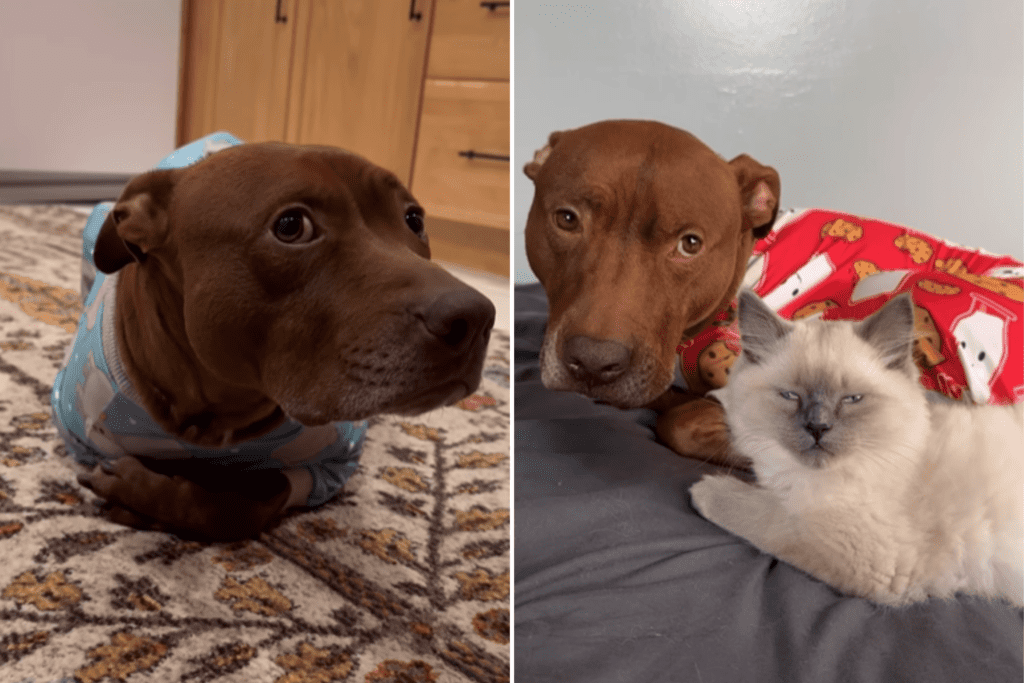
We often think of cats and dogs as sworn enemies that can’t possibly get along, but Opie the pit bull didn’t get the memo. After being raised by cats, he has practically turned into one himself. Before rescuing Opie in 2018, Diana Alvarez had three cats, so it was fascinating to see how he would integrate with them, if at all. She might have expected some conflict to begin with, but to her surprise there was no instinctual hatred between Opie and his feline siblings. They just got along instantly. It wasn’t long before Alvarez, who lives in Massachusetts, noticed Opie copying what the cats were doing and emulating their behavior. Now, she jokes, the 6-year-old pit bull and American bully mix is “definitely more cat than dog.” More From Newsweek Vault: Pet Insurance 101: How Much Does It Cost and Is It Worth the Price? In a viral Instagram video on her account (@ourcozyventures), Alvarez showed some of the things Opie does that prove he really was raised by cats. He loves rubbing against his owner’s legs just like a feline and tries to curl up in one of the cat’s beds. And, of course, he’s learned how to loaf. Opie the 6-year-old pit bull was raised in a home full of cats and now demonstrates his hilarious cat behavior. @ourcozyventures / Instagram “Before Opie, I had cats, so bringing him home to a house full of three cats made him quickly start acting like one,” Alvarez told Newsweek. “I think he’s fond of the cats because they share similar interests, like napping all day long, lounging in the sun and trying to sleep on my lap.” Of all the cat traits that Opie displays, Alvarez said, watching him loaf with his paws curled underneath his body is definitely her favorite. He really has learned from the best. More From Newsweek Vault: Compare Top Pet Insurance Plans For Dogs There’s no doubt that Alvarez has her hands full because she also owns four dogs, including a husky and an Australian shepherd, and four cats. Well, five cats if you include Opie. She often uses social media to document the joy (and sometimes chaos) that her pets bring, whether it’s the realities of owning a gentle pit bull or the mischief her cats can get up to. Opie has certainly become a fan favorite online. The clip showing what “a pit bull raised by cats looks like” has amassed over 53.1 million views and 4.6 million likes on Instagram. More From Newsweek Vault: Nationwide Pet Insurance Review “The video has so many views already, and we’ve received so many happy comments from people telling me they can relate to it,” Alvarez said. In just a few days since the video was posted, it has gained over 7,700 comments on Instagram. Plenty of people seemed obsessed with the idea of a loafing dog, while others shared their own tales of having a dog that is practically a cat too. One comment reads: “MY FIRST TIME EVER SEEING A DOG LOAF OMG M NOT DISAPPOINTED I NEED MORE.” Another Instagram user wrote: “He was a cat in his previous life.” “The cat must be very proud of himself. He’s been a good teacher,” joked one person. Another commenter responded: “Never seen a dog loaf!” Do you have funny and adorable videos or pictures of your pet you want to share? We want to see the best ones. Send them in to life@newsweek.com and they could appear on our site. Read More

Hysterics as Pit Bull Raised by Felines Is Now ‘More Cat Than Dog’ Read More »